The art world has recently lost David Hockney, one of the most renowned and beloved contemporary painters, whose works achieved staggering valuations—even while he was still alive.
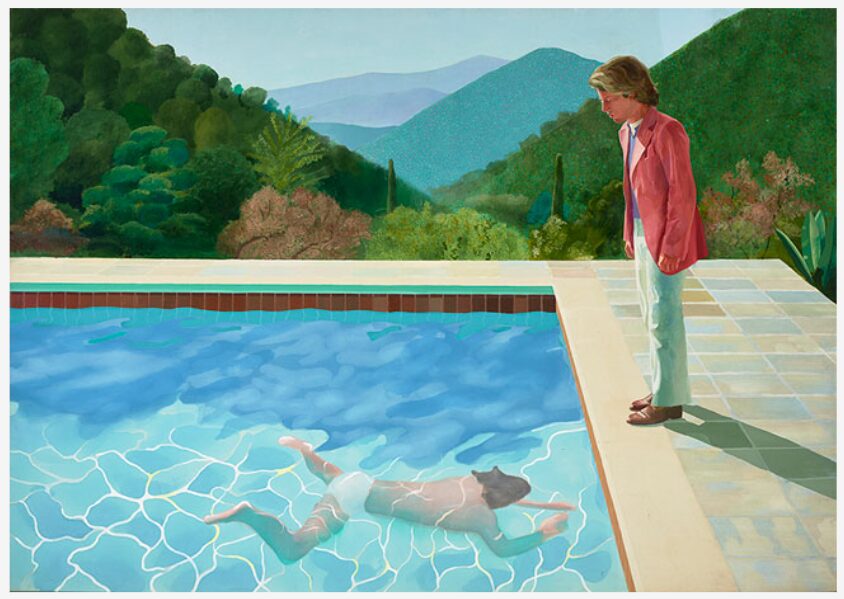
What many may not realize, however, is that he was also one of the most gifted art historians of our time—perhaps the most gifted. He wondered how painting techniques had evolved over time, and around 1999, he pieced together long-known but overlooked fragments of information, giving them new meaning.
As he studied how certain masters achieved such extraordinary results, he noticed a sudden leap in quality in art history—a shift so dramatic that someone unfamiliar with physics might call it a “quantum leap,” to convey the magnitude of the change in detail and the ability to depict reality. This leap was evident but had never been described or explained before.
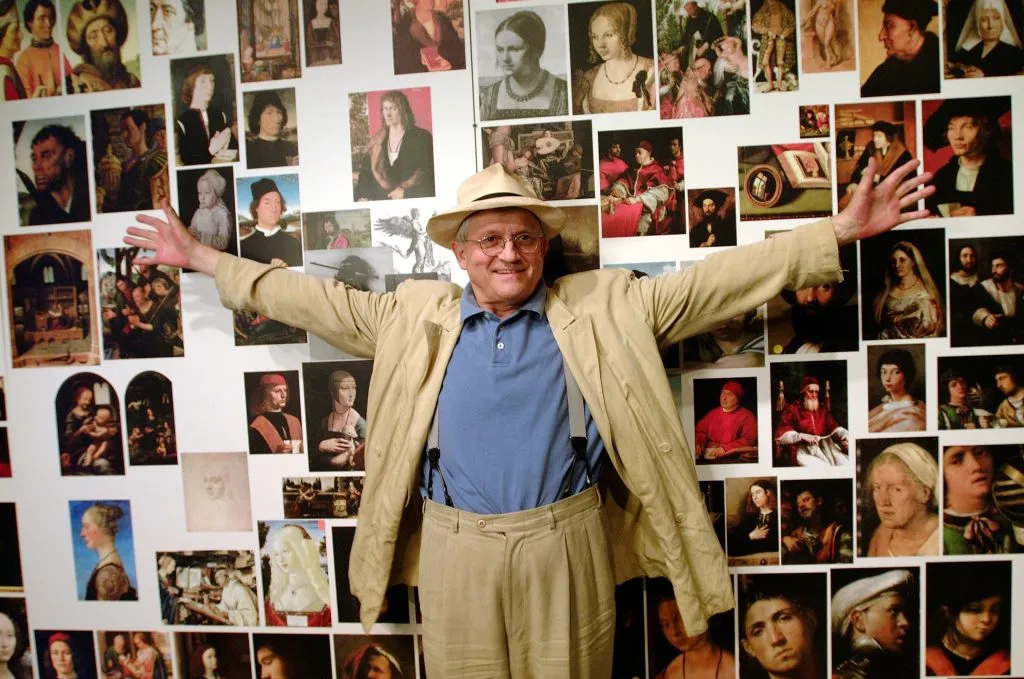
His thesis was that, starting in the early 15th century, many Western artists, particularly in Northern Europe, used optical tools such as lenses and mirrors to project staged scenes onto their canvases. In this way, painters observed new images—a three-dimensional reality projected onto a two-dimensional surface—with perfect precision.
It was the artist’s own eye and firsthand experience that helped him understand that, at some point, artists must have had a new way of seeing and reproducing reality. As he himself wrote, a traditional art historian does not possess the same knowledge as a painter, and so it took an artist to uncover how past masters worked.
Naturally, his theory faced strong resistance, especially from some art historians who recoiled at the idea that the great masters might have “copied” nature using technology and the latest scientific discoveries—as if artists had never done so before.
Yet, while some were horrified, the theory sparked immense interest among scientists. This allowed Hockney, together with American physicist Charles Falco, to develop a highly convincing theory that explains not only how such details and effects were achieved but also why some paintings contain “glaring” errors.
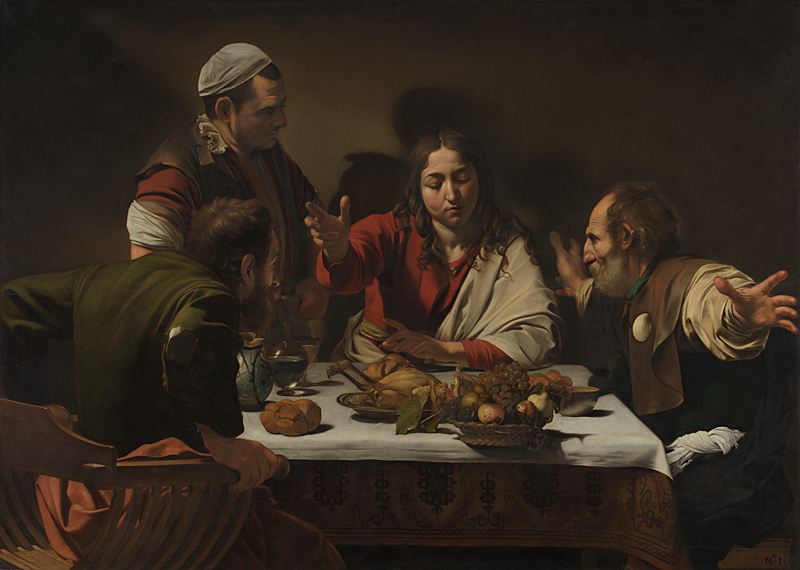
https://www.nationalgallery.org.uk/paintings/NG172
For example, in Caravaggio’s Supper at Emmaus, now housed in London’s National Gallery, there is a strange disproportion between the two hands of Sint Jacob, who is seen in profile with his arms outstretched. The Hockney-Falco theory offers a plausible explanation: the two hands did not fit within the same “frame” and were therefore painted at different times with different “focal points.” No other convincing explanation exists.
The idea that Caravaggio used lenses and mirrors to create his masterpieces had already been theorized independently by Roberta Lapucci in Florence. Her genial observation was based on the fact that there were far too many left-handed figures in paintings compared to the actual percentage in the population, especially considering that using the “devil’s hand” was not entirely socially acceptable at the time.
In 2009, Hockney and Lapucci co-organized a workshop in Florence to debate this theory, and Art-Test was invited to provide a camera obscura, where Hockney gave a live demonstration of how these projections could be achieved using simple tools that were certainly available during the period when the “quantum leap” in art is so clearly visible.
Here the proceedings.
If you’d like to learn more, Hockney published a book, Secret Knowledge: Rediscovering the Lost Techniques of the Old Masters, which will make you see art through the eyes, mind, and hands of an artist. A true marvel. He will be missed.