The Ministry of Cultural Heritage and Environment was born on December 14, 1974, with a decree of urgency.
The “superintendence” system already existed, more or less in the form we know them now, but the competences were divided among various ministries: the Ministry of Public Education (Antiquities and Fine Arts, Academies and Libraries), the Ministry of the Interior (State Archives) and the Presidency of the Council of Ministers (State Music Archive, book publishing and cultural dissemination).
But, above all, the situation of cultural heritage in Italy was disastrous. Everything was missing: the fire alarms and fire extinguishers in the museums, the staff, which, if there was any, was largely obtained thanks to invalids.
And in this scenario, the thefts were rampant. Works and artifacts were easily stolen, countryside churches and archaeological sites were looted.
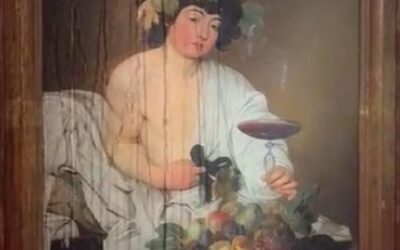
To understand how many crimes were committed, it’s enough to think that in just three months, from May to July in 1974, many important works of art were stolen. In May, a Leonardo da Vinci drawing disappeared from the Museum Baroffio of the Sacro Monte above Varese, along with four 17th-century Flemish paintings and a Renaissance drawing. The Leonardo drawing, in sanguine, the preparatory drawing for the “San Giovanni Battista with the attributes of Bacchus” now at the Louvre, was never to be recovered.
Just a few days later, on the night of June 6-7, 1974, eleven important works were stolen from the Pinacoteca Civica of the Villa Reale in Monza. Only one of them has recently reappeared, for sale at an auction house.
Just a month later, on July 23-24, 1974, together with seven other works, a “Ecce Homo” by Antonello da Messina disappeared from the Broletto Museum in Novara, where it was kept without an alarm system (it was considered to be too expensive), insured by the Municipality for a ridiculous amount.
Before the decree that made the ministry fully operational on December 3, 1975, on February 5, another spectacular theft occurred: taking advantage of the scaffolding set up next to the palace, the thieves stole three important works from the National Gallery of Urbino: the “Madonna of Senigallia” and the “Flagellation of Christ” by Piero della Francesca, along with a portrait of a noblewoman, known as “The Mute“, by Raphael.


Also in 1974, the agreement between De Gasperi and Adenauer (two of the fathers of the European project) to recover and return the works of art stolen after World War II was considered expired.
While many of the countless works of art stolen by the Germans were still missing, a large number of them were likely taken to Russia and lost there. The Russians, in fact, consider the works of art taken from the Germans as a compensation for the war damages.
The inventory of the dispersed Italian artistic heritage at the time of the Second World War was simply enormous. From a small tempera by Pietro Lorenzetti, stolen by the Nazis in Perugia, to the “Tribunale della Mercanzia” by Simone Martini, lost in Siena in 1944, to the “Portrait of a Young Man” by Botticelli, taken by German soldiers from the Neapolitan Villa San Paolo di Belsito before setting it on fire, to paintings and drawings by Parmigianino, Mantegna, Lorenzo Di Credi, Jacopo Bassano, Bronzino, Tintoretto, Vasari, Raphael, Canaletto, up to Michelangelo, whose “Bacchus” was stolen in 1944 by the 305th infantry division of the Nazi army from the castle of the Pioppi of the Conti Guidi in Arezzo. Not to mention the ancient Greek, Roman, and Etruscan artifacts that were stolen or destroyed.

In short, fifty years ago the Ministry was born with the urgency to put an end to the bleeding of art from Italy, in a pivotal moment that demanded a State response. And the Italian State responded.
Has it worked? Fifty years later, the Ministry has a capillary structure that covers multiple aspects related to the conservation and valorization of our heritage. Thefts have not stopped, but there is certainly more attention and more tools available to those who guard valuable works of art. Even in the field of restitution, great progress has been made. (Read everything that is published on the Journal of Cultural Heritage Crime).
Nowadays, just a few months ago a former Undersecretary of Culture, Vittorio Sgarbi, has been accused, and apparently with good reasons, of counterfeiting works of art, recycling derived from the attempt to hide the illicit origin of the goods and self-recycling.
The accusations concern the case of a 17th-century Sienese painting, by Rutilio Manetti, which carries the risk of a 12-year prison sentence. At the center of the case is a large canvas, “The Capture of Saint Peter”, according to the accusation stolen from the Buriasco castle (Turin) in February 2013, and reappeared in 2021, as a previously unknown work by Manetti and owned by Sgarbi.

The subject of the disappeared painting is identical to that of the reappeared one, except for a detail that scientific analysis has easily identified as a recent retouch. Other scientific analyses on the canvas appear to have shown the total compatibility between the canvas of the artwork now owned by Sgarbi and that remaining at Buriasco, and also the compatibility of certain damages suffered by the reappeared canvas with a precarious transport, for example rolled up in a carpet.
It’s likely that those who acted in 1974, the Prime Minister Moro, and the cultivated Giovanni Spadolini, the first Cutural Minister, have turned over in their graves.