In San Gimignano with a team of acrobats to conduct complex structural diagnostics for the Italian National Trust
Also known as the “Manhattan of the Middle Ages,” San Gimignano is located along the Via Francigena, in Tuscany, Italy. During its peak, the city saw the presence of numerous masters, both from Siena and Florence, such as Lippo and Federico Memmi, Benozzo Gozzoli, Domenico Ghirlandaio, and Piero del Pollaiolo.
However, this time, we were not concerned with their paintings but with a tower—an unequivocal symbol of power that still stands in the city center.
After all, the reason San Gimignano was declared a national monument in 1929 and, in 1990, a UNESCO World Heritage Site is primarily due to its towers.
Out of the 72 towers and tower-houses that once existed, twenty-five remained in 1580, and today, only fourteen still stand, with others, now truncated, barely visible within the urban landscape.
Medieval towers served various functions, primarily defensive, economic, and social. They were used as safe refuges in case of attack. In fact, they were fortified with few openings and easily controllable access points to provide protection during assaults or invasions. However, towers also symbolized the prestige and power of noble families. In medieval society, the height of a tower reflected the social status of the family that owned it. The taller the tower, the greater the family’s importance and wealth. Consequently, the city itself was portrayed with all its towers proudly displayed, as seen in the painting here.
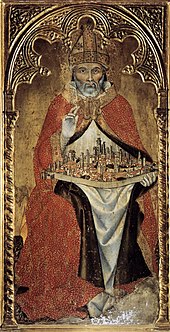
The wealthiest and most powerful families sought to build ever-taller towers to demonstrate their superiority. Laws were even enacted to limit the height of towers to prevent excessive competition.
In San Gimignano, a 1255 regulation forbade private individuals from erecting towers taller than the Torre Rognosa (which at the time was the tallest at nearly 52 meters). However, the two most important families, Ardinghelli and Salvucci, built two slightly shorter towers of almost equal height to demonstrate their power.
The Campatelli Tower is one of the fourteen surviving towers of San Gimignano. The 28-meter-high tower was erected in the 12th century next to a house. While some towers were also used as residences, this one was not.
The Campatelli family purchased this tower-house at the beginning of the 19th century, along with the adjacent noble palace, where they established their residence after making a fortune in the alabaster market. In 2005, they donated it to the FAI (Italian National Trust) on the condition that it be opened to the public. To this day, the tower is the only one in all of San Gimignano to remain unaltered inside; it is, in fact, “empty”—a precious historical testimony.
The FAI’s task is to preserve the places entrusted to it, and so, in recent months, they involved us in designing a diagnostic campaign that included both sample collection and non-invasive investigations of the elevations, with the aim of monitoring the state of the façade’s preservation and studying some issues present in the Tower and within the House.

The unique aspect of this project was the difficulty of sampling since scaffolding was not installed to allow sampling actions. From the outset, the use of actual acrobats was planned. Let’s just say the areas to be reached were not exactly “within arm’s reach.”
Thanks to the coordination of architect Baccega from the FAI, it was possible to collaborate with the Siena Acrobatics Construction Group. They, guided by us, sampled the areas of interest. At the same time, a structural diagnostic campaign was carried out inside.
This time, the “airborne” worksite was watched by hundreds of tourists strolling along Via San Giovanni, all with their heads tilted upward, watching and photographing the diagnostic acrobats “walking” on the Tower’s walls. Spider-Man has nothing on them!