The European Fine Art Foundation (TEFAF) once again, on March 12 to 19, presented its unmissable event , reaffirming itself as a must-attend gathering for collectors, critics, museum curators, and art lovers from around the world. With 276 dealers and galleries from 24 countries and 5 continents, the fair showcased 7,000 years of history, from prehistoric bronzes to … Basquiat!
Among the museum curators visiting during the preview days were leading institutions such as the Metropolitan Museum of Art, Rijksmuseum, Louvre (including its Abu Dhabi branch), Musée d’Orsay, National Gallery, Van Gogh Museum, Städel Museum, Museum of Fine Arts Boston, and the Museo di Capodimonte. This audience doesn’t just observe—they seek, discover, and acquire.
And indeed, sales were up across all sectors, including Old Masters—even lesser-known ones—despite the growing number of modern art galleries this year. However, the notion that tastes have shifted from previous generations. Often, buyers look for “easy” pieces—works with immediate visual impact—rather than rare or missing pieces to complete a collection.
Yet, the fair’s offerings were rich enough to satisfy any taste: paintings, furniture, antiquities, archaeology, works on paper (including priceless ancient books), photography, modern and contemporary art, ancient and modern jewelry, design, and African, Oceanic, and Tribal arts.
And every piece with a story to tell, sometimes even more fascinating than the artwork itself. Like the tale of the eccentric English lord passionate about high jewelry, shared by Giovanni Massa of Wartski, or the rocambolesque rediscovery in England of a Roman villa corridor mosaic featuring an extremely rare “pelta” design of Romanian origin!

Even after dedicating two full days to it, we couldn’t see everything. Still, we’re leaving you with some lasting impressions and a few images that truly struck us.
One of the most compelling aspects of this year’s edition was the strong presence of works by women artists—historically underrepresented, often due to misattributions in the past.


a gallery of paintings at TEFAF by women artists
In fact, Lavinia Fontana’s newly rediscovered Portrait of Isabella Runi with a Lady-in-Waiting—initially misattributed to the School of Fontainebleau—was one of the fair’s highlights. It found an Asian buyer reportedly for a price between €1.7 million and €3.5 million.

But the undeniable star was Artemisia Gentileschi, with four masterpieces displayed across various stands. In particular, Fondantico Gallery showcased its 1630 Penitent Magdalene, rumored to have received offers from an American museum. Art-Test conducted X-ray analysis on this painting. We provided our diagnostic services for three of the works exhibited at the fair.
Indeed, a compelling set of diagnostic investigations is essential to pass the rigorous vetting process which TEFAF is renowned for.

Analyses are almost always conducted, though not always displayed. In the case of the painting from Leonardo’s school—one of this year’s major attractions—the results were exhibited alongside the work at Agnew’s Gallery in London. The piece in question is one of the most famous images in Western tradition: the Salvator Mundi

The work is an oil on walnut panel (68.6 × 48.9 cm) dating between 1505 and 1515. Its quality and striking stylistic proximity to Leonardo continue to fuel debate among art historians and curators. Among the investigations conducted, infrared reflectography revealed a hand similar to that found in other works by the master, as well as traces of spolvero—the technique of transferring a preparatory drawing onto the painting surface using charcoal dust. This suggests the reuse of a model.
Known as the Ganay version, this work was previously exhibited at the Prado as part of an exhibition dedicated to copies and workshop practices linked to Leonardo. On that occasion, it was hypothesized that the artist of this Salvator Mundi might be the same hand behind the famous copy of the Mona Lisa housed at the Prado.


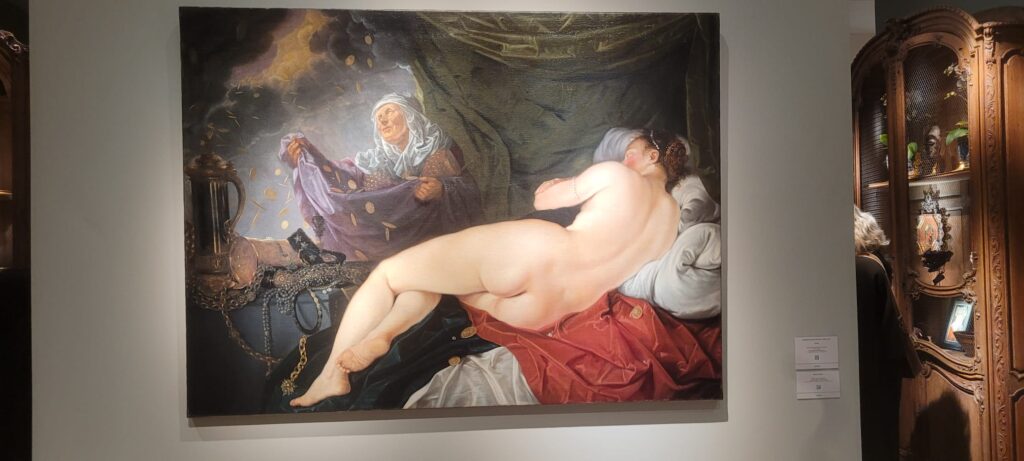


At the fair, the asking price was not disclosed—though increasingly, prices are displayed on the labels (check out our image galleries to see several examples!).


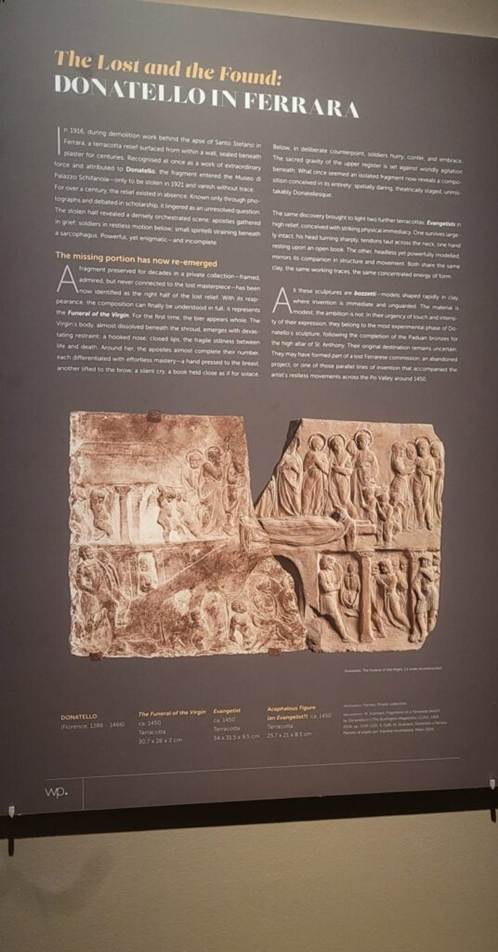
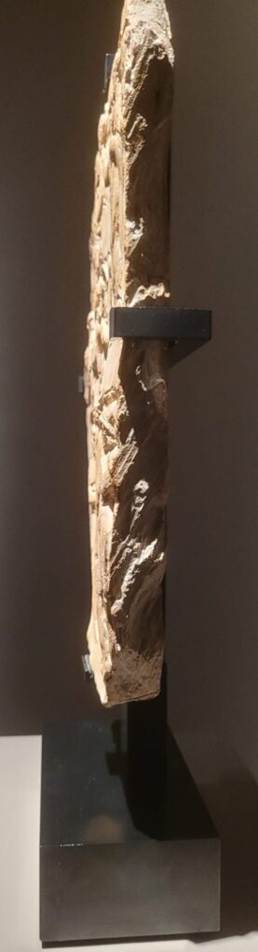
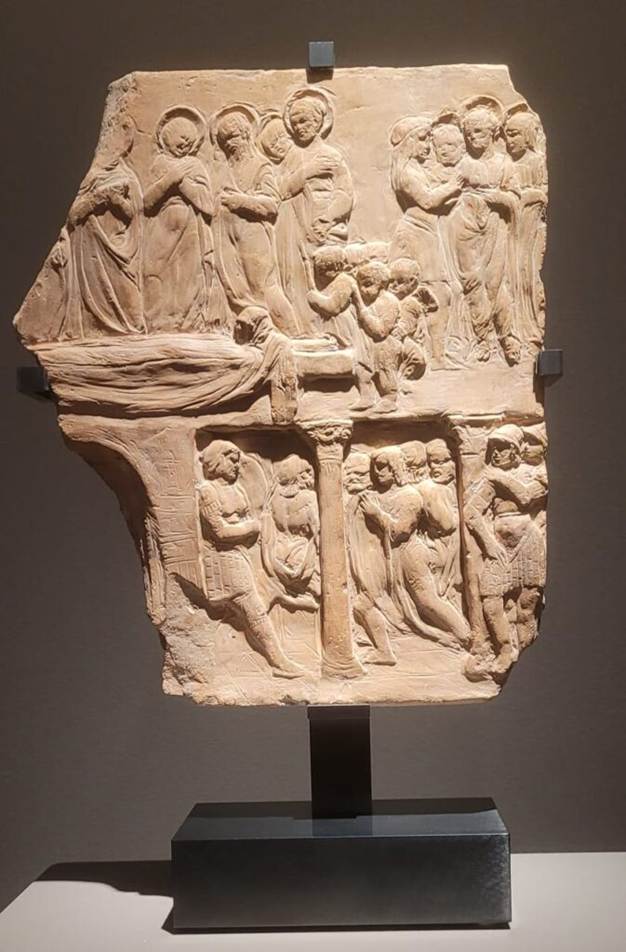
Donatello, bas-relief depicting The Funeral of the Virgin , proposed da Padovani
An absolute masterpiece, presented without any attributive doubts, is the Donatello sculpture around which Padovani built its stand, to unveil it to the public for the first time. It is a bas-relief depicting The Funeral of the Virgin alongside two half-figures of evangelists. This is a very recent discovery, published in The Burlington Magazine by Marco Scansani, which completes the understanding of a relief fragment known to scholars since 1916.
Also for sale was the Vase of Emperor Nero (37–69 AD), commissioned for the Roman imperial residence, the Domus Transitoria.
Made of Egyptian granite, this artifact reappeared on the market for only the second time in nearly two millennia, following its discovery around 1721 and subsequent placement at the renowned Castle Howard. It was acquired by an American museum for approximately €2 million.


We were also captivated by the cassone panel attributed to Domenico di Michelino, depicting Legends of the Greeks and Amazons: Theseus Abducting Antiope (at Brimo de Laroussilhe’s stand). This mid-15th-century tempera-on-panel work clearly showed how the armor and other details were once adorned with metal leaf, which must have created a spectacular effect. Its counterpart, The Battle of the Greeks and Amazons, is now housed in the Indianapolis Museum of Art.
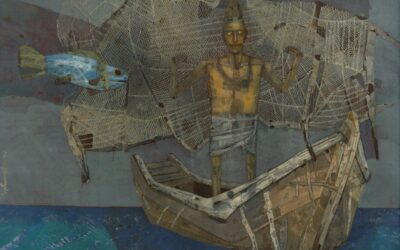
Another fascinating story is that of the painting L’homme est en mer (1887–1889) by French artist Virginie Demont-Breton. It was known that the painting existed and was depicted in a catalog sent by her brother to Vincent van Gogh, who liked it so much—even though he had only seen a tiny reproduction—that he decided to recreate it. However, the painting’s whereabouts were unknown. America Gallery 19C rediscovered it in a private overseas collection and sold it at the opening of the fair to the Van Gogh Museum for a sum between €500,000 and €1,000,000.


Another notable highlight of this edition—though not surprising—was the strong Spanish presence. Not only did the number of Spanish galleries grow, showcasing works of exceptional quality, but the sound of the Iberian language often echoed through the halls. Spanish works were also featured in many international galleries. A remarkable piece was presented by Kugel Gallery: a three-dimensional wax view of Madrid, one of four scenes created for the marriage of Maria Amalia of Saxony to the future Charles III, crafted by Nicola Engelbert Cetto in 1740. Long believed lost, this work is actually the best-preserved of all, with incredible details not always visible to the naked eye (magnifying lenses were provided for closer inspection). It was offered for €2,500,000.

Among the names on display were Velázquez, Goya, Ribera, Sorolla, Cano, Coello, El Greco, and even an intriguing Sargent copying El Greco.
One of the themes of this edition was the new European regulations for importing cultural artifacts and artworks over 200 years old, designed to curb illicit trafficking—particularly from war zones—where such trade has historically funded conflicts. However, these rules have complicated life for dealers, who complain that the focus has shifted from the quality of the object to the quality of its provenance.
Another new development is Italy’s tax regime. Alessandra di Castro highlighted how the VAT reduction to 5% represents a significant advantage for Italian exhibitors, along with other introduced measures—clearer export timelines and procedures, higher value thresholds, and defined rules for works by foreign artists active in Italy. It is hoped that these changes will mark a concrete turning point, finally making Italy more attractive in the European market, especially in a post-Brexit landscape.

We must also highlight an absolute marvel: a complete 14th-century nautical map of Europe, spanning from Norway to the Mediterranean and Africa. The oldest still in private hands, it is one of only four surviving maps from that period. This portolan chart, drawn on parchment with Venice at its center, reflects the geographical knowledge of the time and the growing interest in the world beyond Europe’s borders. The cartographer paid homage to Ptolemy, the absolute authority of the era, by including his portrait. Likely a practical tool for explaining trade routes and ports, it was probably intended for consultation by rulers rather than for travel. It encapsulated a rare and precious sum of knowledge.
Even this exceedingly rare piece underwent extensive diagnostic investigations. The parchment was examined using carbon-14 dating and multispectral imaging, among other methods. It is said that billionaires Anna and Gordon Getty once kept it in their private jet before putting it back on the market. Unfortunately, there’s no guarantee it won’t remain in private hands instead of ending up in a public collection. We could easily picture it in the House of European History in Brussels, but the €6,500,000 asking price currently puts it out of reach, according to the director of that institution.
We hope we won’t be deprived of this incredible—and frankly, antidepressant—possibility!