But Rose Dugdale
A man suspected of being the fourth member of the gang behind the Louvre theft was arrested along with his brother, his sister, and a friend: two men and two women. An unusual gender balance.
This week marks the international campaign against violence toward women, a moment dedicated to raising awareness about the inequalities, pressures, and dangers that women continue to face worldwide. It is also an opportunity to look more closely at how gender shapes every area of society — even in unexpected contexts, such as art crime. Popular culture, film, and television are full of glamorous, sophisticated female art thieves, but reality tells a very different story.
In pop culture, female art thieves are everywhere. Selina Kyle — better known as Catwoman — prowls rooftops with feline precision, stealing jewelry, paintings, and antiques with a mix of seduction and acrobatics. Carmen Sandiego travels the world reclaiming cultural treasures, part thief, part activist. Felicia Hardy, Marvel’s Black Cat, follows a similar path as a master thief of high-value artworks. Even cartoons, such as DuckTales, feature elegant thieves who outwit everyone around them. On the big screen, characters played by Grace Kelly, Catherine Zeta-Jones, or Rene Russo combine charm, intelligence, and danger, creating the archetype of the irresistible, skilled, morally ambiguous woman who steals masterpieces as if it were an art in itself.
Reality, however, tells a very different story. Interpol, Europol, and criminological research consistently show that the vast majority of art-related crimes — from museum thefts to illicit antiquities trafficking — are committed by men. Women make up only a small fraction of offenders and are far less represented among those carrying out high-risk or high-profile heists. When they appear in records, they usually play secondary roles: assisting with logistics, hiding stolen works, facilitating cross-border transfers, or participating in black-market sales.
The archetype of the elegant, highly skilled female thief is therefore mainly a product of male imagination.
In this male-dominated landscape, Rose Dugdale stands out as an extraordinary exception: the only documented case of a woman leading a major, high-profile art theft, involving world-famous masterpieces. Her story reads like a novel — but it is real.
Born in 1941 into a wealthy English family, Dugdale grew up surrounded by privilege and social expectations. Yet the political turbulence of the 1960s and ’70s profoundly shaped her worldview. Rejecting the establishment she was born into, she embraced radical politics and joined the IRA. Unlike fictional female thieves, driven by thrill or personal gain, Dugdale saw art theft as a tool for political leverage.
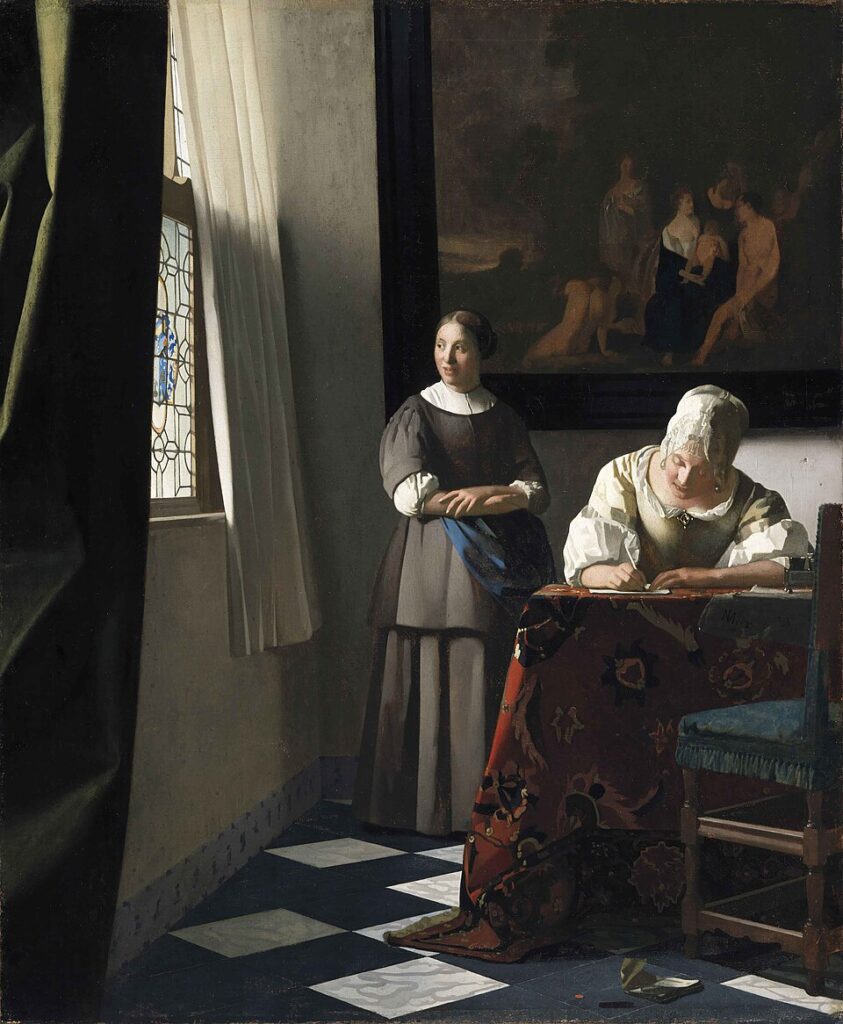
On April 26, 1974, she orchestrated and personally led an armed raid at Russborough House in County Wicklow, Ireland, a historic estate housing one of Europe’s most important private collections. She and her accomplices overpowered Sir Alfred and Lady Beit, tied them up, and stole nineteen Old Master paintings, including works by Vermeer, Goya, Rubens, and Gainsborough. The theft had a clear purpose: the artworks were to be used as leverage for money and the release of IRA prisoners.
The plan collapsed within days. The Gardaí — the Irish national police — launched a swift investigation, piecing together testimony and intelligence until they located the paintings on a farm in County Cork. On May 4, 1974, they conducted a search, recovering all works in good condition and arresting Dugdale. During her trial, she refused to deny her actions, stating firmly that she was “proudly and incorrigibly guilty.” She was sentenced to nine years in prison.
Dugdale’s case remains an extraordinary exception.
In this week dedicated to fighting violence against women, it is worth reflecting not only on the risks women face, but also on the stories we tell about them, the supposed abilities that intrigue a predominantly male audience, and how far these tales are from reality — no matter what one thinks of Rose Dugdale.