At the online auction “Dipinti Antichi” (Old Master Paintings) held April 10–16 by Pandolfini in Florence, a battle scene in poor condition—catalogued as the work of an anonymous 17th-century Lombard artist and estimated at €2,000–3,000—was sold for a remarkable €400,000 after intense bidding.
This result is explained by the buyer’s belief that the work could be an unpublished piece by Nicolas Poussin. In that case, they would have paid less than its true value.
An attribution yet to be confirmed
Immediately after the sale, Poussin’s name began circulating insistently online, also due to clear similarities with some famous battle scenes from the painter’s early Roman period, now held in major international museums—one at the Pushkin Museum, one at the Hermitage, and one at the Vatican Pinacoteca.
All three known paintings, dated 1625, have very similar dimensions (98×134 cm and 98×137 cm) to the one sold in Florence (100×137 cm in the catalogue).
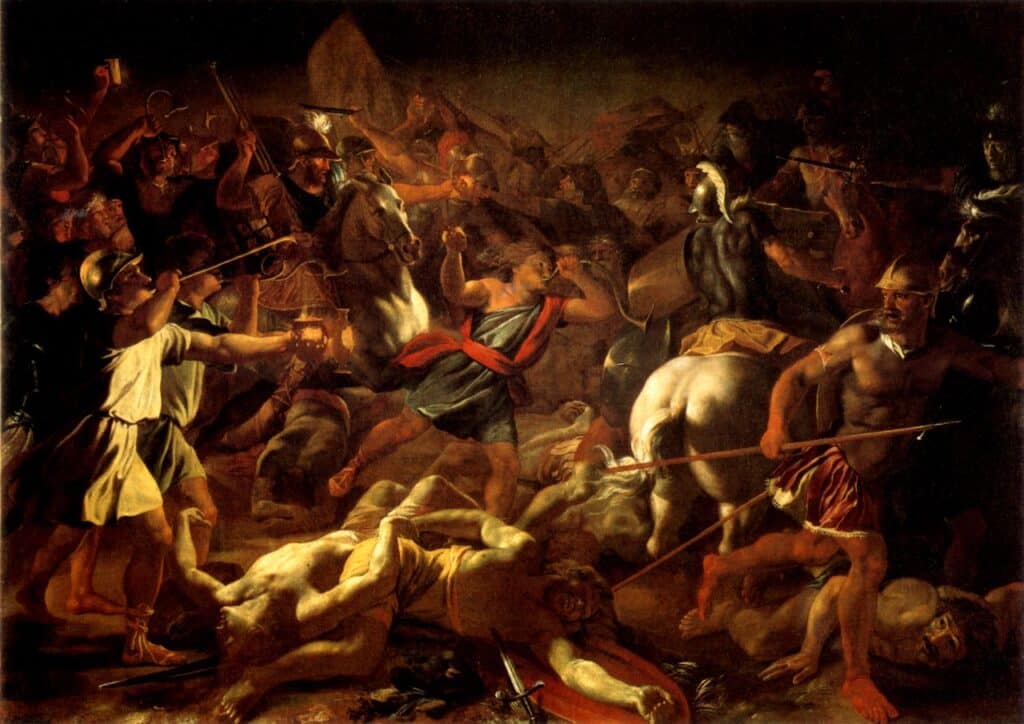
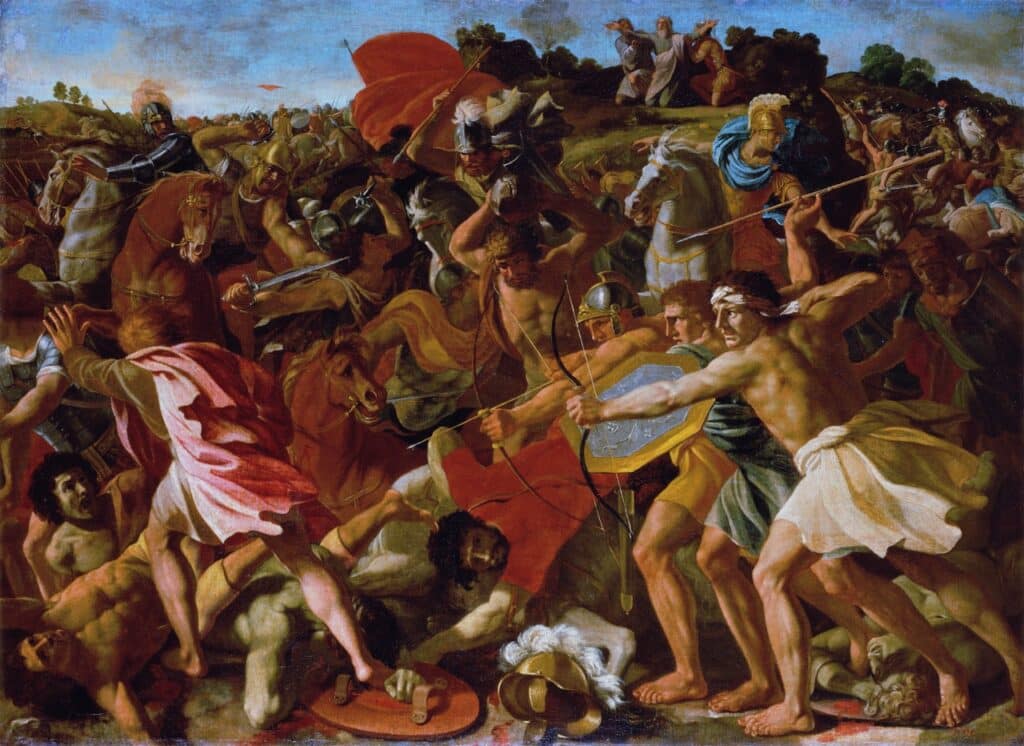
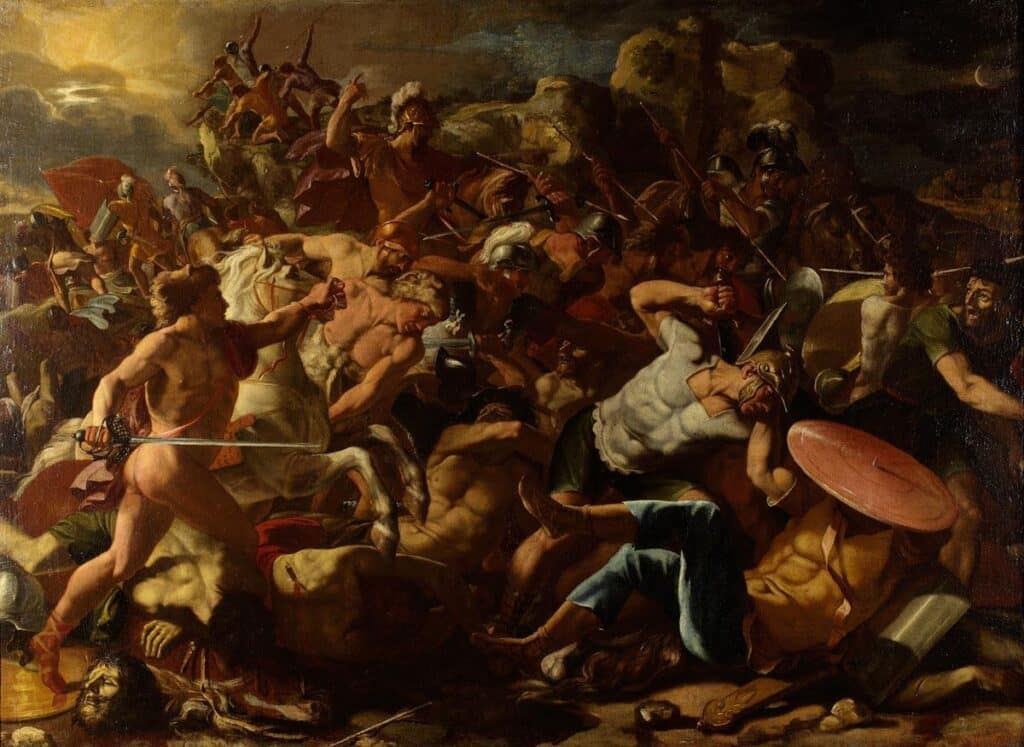
There are also clear compositional similarities, and it seems reasonable to think that Poussin may have painted two pairs of battle scenes rather than just a set of three. Speculation is also growing about which battles are depicted and whether there are connections with other works.
However, more cautious voices in the debate suggest alternative attributions to lesser-known painters such as Andrea Di Lione or Pietro Testa, arguing that the painting’s quality may not be sufficient to consider it an original.
As often happens in such cases, the debate remains open—and is likely to stay that way until objective evidence is gathered.
The missing analyses
Scientific investigation will, as always, play a decisive role. Beyond stylistic impressions, it will be the study of materials and painting technique that determines whether this is an authentic Poussin, a workshop piece, or a copy—perhaps an old one—of a lost original.
This will have major implications for the painting’s value, which could drop back to €3,000 or rise to several million euros depending on the outcome. Naturally, one hopes that the buyer who invested such a significant sum will not face disappointment.
An opportunity for public heritage?
If the attribution to Poussin is confirmed, it would represent a discovery of major importance. In Italy, works by the French master held in public collections are extremely few—only about five—and not always representative of the peak of his production, despite the fact that he lived and worked extensively in Italy.
This raises a broader question: should the state intervene to prevent works of such importance from leaving the public sphere, as has happened in the past with masterpieces attributed to Giorgio Vasari, Jusepe de Ribera, Jacopo Bassano, or Simon Vouet?
A museum such as Palazzo Barberini, for example, would certainly benefit from filling a significant gap in its collection of Poussin’s works.
The precedent of “Susanna and the Elders”
The issue of attributing works to Poussin is not new for art-test.com. Analyses carried out on the painting Susanna and the Elders have already shown how essential it is to combine art-historical study with scientific data in order to reach solid conclusions.
The Pandolfini case perfectly illustrates the tension between the art market, attribution, and knowledge: on one side, the intuition—or gamble—of collectors; on the other, the need for scientific verification.
Today more than ever, attribution cannot rely solely on the eye, no matter how expert. It is through the dialogue between art history and science that firm conclusions can be reached.
And only analysis will tell us whether we are truly facing a new Poussin—or a different, perhaps equally fascinating story.