The Restoration and Analysis Reveal the Secrets of Pollaiolo’s Lady at the Poldi Pezzoli Museum
The latest restoration of the painting Lady at the Poldi Pezzoli Museum in Milan has been completed. As often happens with careful restorations, the painting has revealed fascinating surprises.
The restoration work was conducted in the presence of the public, allowing visitors to observe the numerous steps involved in such a complex and captivating process. The last conservation intervention dated back to 1951, and over time, the surface had become noticeably yellowed, primarily due to the aging of the varnish. This made a new restoration necessary to preserve the beauty and integrity of the artwork.

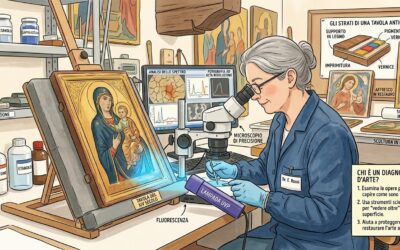
Before beginning any restoration phase, it is essential to conduct a diagnostic investigation. In this case, the analysis was extremely in-depth, aiming to precisely assess the painting’s state of conservation and scientifically determine the most appropriate intervention.
With today’s advanced technical examinations, it is possible to establish how an artwork was created, identify the materials used, date the piece, and even refine the attribution of the artist who executed it.
New Discoveries from the Analysis
One of the most remarkable findings from this restoration was the detection of an underlying preparatory drawing outlining the lady’s profile with remarkable precision. Additionally, the jewelry in the portrait was found to be executed with an extraordinary miniaturist technique, making them appear three-dimensional with metallic highlights.
A similar technique was used for the velvet gown, where the curls of the fabric were painted in relief, creating a tactile, sculptural effect on the painted surface.
This elegant profile portrait of a young woman was a common artistic convention in 15th-century Florence, typically created to commemorate a marriage. The artist’s meticulous attention to jewelry and garments was not only meant to depict the subject’s social status but also to convey, through symbolism, her moral virtues.
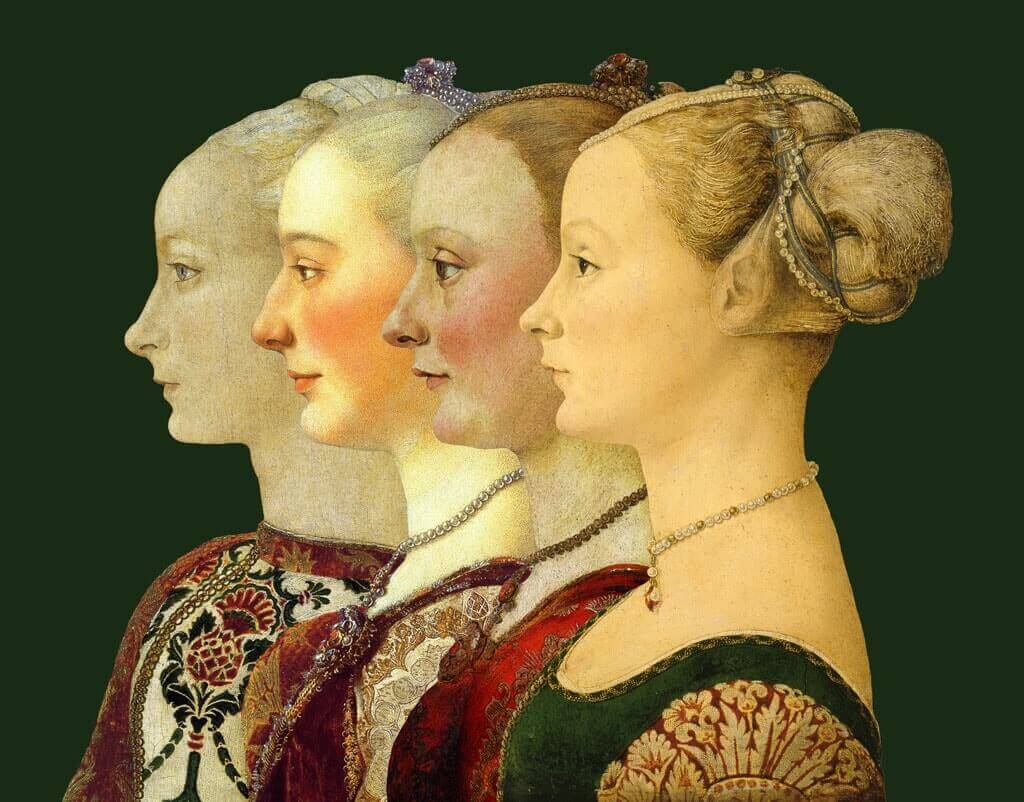
At least four similar female portraits can be securely attributed to the Pollaiolo brothers, and they are now housed in four different museums:
- Poldi Pezzoli Museum, Milan
- Uffizi Gallery, Florence
- Gemäldegalerie, Berlin
- Metropolitan Museum of Art, New York
Who Painted the Ladies: Piero or Antonio Pollaiolo?
The question remains: Which of the two Pollaiolo brothers—Piero or Antonio—painted these portraits?
The debate over authorship has remained open since these four portraits became widely known in the early 19th century. The Pollaiolo brothers were active in Florence in the second half of the 15th century, but historical evidence suggests they worked independently rather than as a team.
- Antonio Pollaiolo was primarily recognized as a goldsmith. He himself identified as such in historical records, and later became a sculptor in bronze, famously creating the two papal tombs in the Vatican. He was also the great draftsman of the duo.
- Piero Pollaiolo, on the other hand, is consistently referred to as a painter in all contemporary documents. He had his own studio separate from Antonio’s, located in Piazza degli Agli, Florence.
A 2015 exhibition at the Poldi Pezzoli Museum, curated by Aldo Galli and Andrea Di Lorenzo, sought to definitively resolve the attribution of these female portraits and the broader Pollaiolo painting corpus. The curators argued that Piero, rather than Antonio, was the author of the Lady portraits.
Why Piero?
Galli’s analysis focused on works securely attributed to Piero Pollaiolo, such as:
- Those within the six Virtues cycle (Uffizi Gallery)
- The Coronation of the Virgin (San Gimignano)
Piero demonstrated an exceptional ability to depict luxurious materials, such as jewels, fabrics, brocades, and velvets. His skill was enhanced by an innovative use of oil paint, a technique that was rare in Florence at the time, where tempera was still dominant. This suggests he was influenced by Flemish painters, who were known for their realistic depictions of textures.
Since these distinctive qualities—the masterful representation of precious materials and the advanced painting technique—are evident in the four Lady portraits, the evidence strongly supports Piero as their creator.
The Debate Continues
As with many art historical attributions, not all scholars agree. Some still believe Antonio Pollaiolo was responsible for the Lady portraits. The discussion remains ongoing, as researchers present arguments for both possibilities.
Antonio Pollaiolo: The Sculptor and Goldsmith
Antonio Pollaiolo is widely recognized as a versatile and brilliant artist, excelling in terracotta and bronze sculpture, goldsmithing, and embroidery.
In 2013, Art-Test had the opportunity to analyze a wooden bust of a young girl, which had been stylistically attributed to Antonio Pollaiolo.
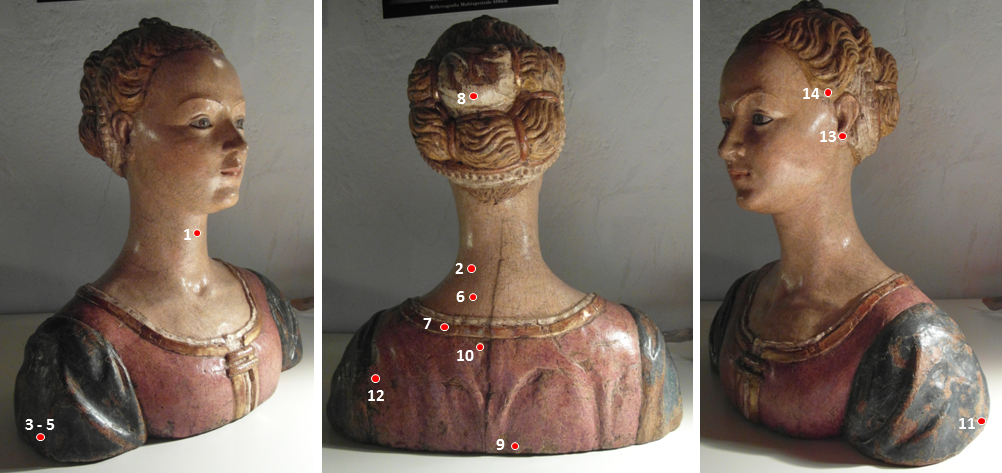
Art-Test conducted in-depth material analysis on the bust, comparing its composition to that of Antonio’s Martyrdom of Saint Sebastian, which had been previously studied by the National Gallery in London.
An initial concern arose regarding the presence of zinc in the bust, as this element was not typically found in materials from Pollaiolo’s time. However, after consulting with restorers to understand past conservation treatments, researchers discovered that the zinc traces were not original. Instead, they were remnants of modern cleaning and consolidation materials used in restoration processes.
Once this issue was clarified, the scientific data strongly supported the attribution of the bust to Antonio Pollaiolo.
The entire study was published in an elegant volume edited by the Chiale family, renowned antiquarians from Turin, and curated by historian Giancarlo Gentilini.