An Exhibition to Discover Not Only the Painter and His Canvases, but Also Roberto Longhi and Anna Banti, Who (Re)Discovered Caravaggio
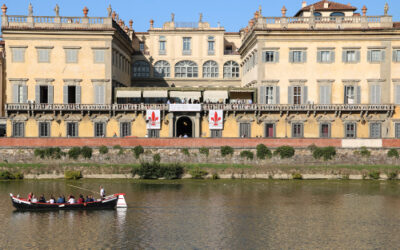
From March 27 to July 20, 2025, Villa Bardini in Florence will host the exhibition Caravaggio and the Twentieth Century: Roberto Longhi, Anna Banti. This exhibition goes beyond a simple display of artworks; it is an engaging narrative dedicated to one of the most influential couples in Italy’s intellectual and art historical landscape of the 20th century.
It was Roberto Longhi himself who, in 1951, brought renewed attention to Caravaggio’s genius by organizing the famous exhibition at Palazzo Reale in Milan, which was visited by over 400,000 people. This pivotal event marked a turning point in Italian art history: Michelangelo Merisi, once forgotten and marginalized, was finally recognized in a new light—not as the last painter of the Renaissance, but as the first of the modern era.
Promoted by the Fondazione CR Firenze, in collaboration with the Fondazione Roberto Longhi, and curated by Cristina Acidini and Claudio Paolini, the exhibition in Florence highlights the pioneering work of Roberto Longhi and Anna Banti in rediscovering and promoting 17th-century Italian art. Their commitment extended beyond research; they also made art accessible through cultural outreach via television, radio, and popular magazines—an effort aimed at making art understandable and available to all.

📍 Villa Bardini, Florence – March 27 / July 20, 2025
🎨 Curated by Cristina Acidini and Claudio Paolini
🔹 Promoted by Fondazione CR Firenze and Fondazione Roberto Longhi
The Villa Bardini exhibition presents 40 artworks that illustrate this rediscovery and its impact on 20th-century art. Alongside The Apostles by José de Ribera, a selection of paintings by Giorgio Morandi, De Pisis, and Guttuso, as well as photographs and historical documents, one of Caravaggio’s most famous paintings stands out: Boy Bitten by a Lizard.
Multispectral Analysis of the Longhi Foundation’s Painting
This painting, considered one of Merisi’s earliest works, exists in two very similar versions. The one featured in the exhibition, owned by the Fondazione Roberto Longhi, has undergone diagnostic analysis conducted by Art-Test and Dr. Roberta Lapucci at the Longhi Foundation. The other version is housed at the National Gallery in London.

There are no definitive sources identifying a commissioner for this artwork, leading scholars to believe that Caravaggio created it without a specific commission, likely in the 1590s. For a long time, the authorship of the Longhi version was debated, with some attributing it to a painter from the Manfredi circle.
In recent years, an extensive debate has emerged recognizing the possibility that Caravaggio himself replicated his compositions, opening the door to the idea that multiple autograph versions of his works might exist.
The two canvases are highly similar, even in their dimensions. A key feature visible in both versions is the preparatory layer that emerges in certain areas of the painting, revealing the use of earth-based pigments for the underpainting, along with lead white, ochres, and cinnabar—all characteristic elements of Caravaggio’s technique.
The Symbolism of the Painting
The subject of the painting is a curly-haired young man adorned with a rose, captured in the moment of reacting to a lizard’s bite as it emerges from the flowers and fruit arranged in a glass carafe. The boy’s expression of pain and shock is extraordinarily vivid, intensely dramatic, and undeniably effective.
The meaning of Boy Bitten by a Lizard can be interpreted in two ways:
- An Allegory of Hidden Dangers Behind Sensual Pleasures – The boy’s sudden pain could symbolize the unexpected suffering that can arise from indulging in worldly pleasures.
- A Religious Message – The presence of cherries, a symbol of Christ’s Passion and martyrdom, suggests a spiritual reading, in which pain becomes an integral part of both human and divine experience.